Why Short-Term House Price Moves Matter Less Over Time
Why short-term house price moves matter less over time
Nerida Conisbee, Chief Economist, Ray White Group
House prices have come under some pressure in recent months in parts of Australia, but for long-term homeowners that is only one part of the story. Over the past 20 years, the median Australian house price has risen from around $350,000 to about $1 million, despite repeated economic shocks, changes in interest rates and very different housing market conditions.
The path has not been smooth. Periods of very strong price growth have been followed by slower conditions and, at times, outright falls. These shifts can feel significant in the short term, but over a longer period they are relatively small compared with the overall increase in values.
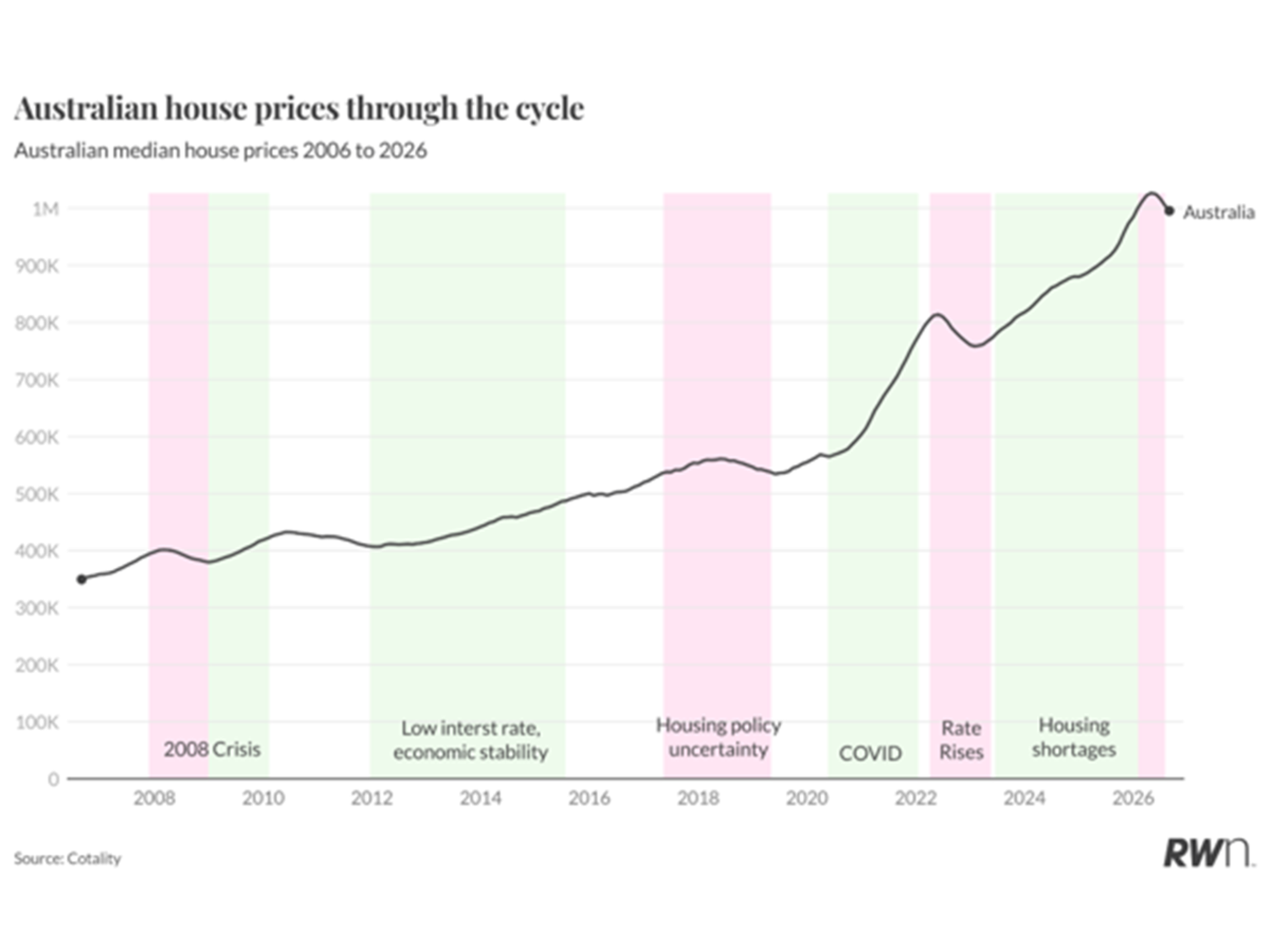
That is particularly relevant for people who have owned their home for many years. A five or 10 per cent movement in prices can have a major impact on someone who bought recently. For a long-term homeowner, it is generally a much smaller movement relative to the capital growth already accumulated.
The same pattern can be seen across the major cities. While the scale of growth differs, median house prices are substantially higher than they were two decades ago. Sydney has risen from around $460,000 to $1.5 million, Brisbane from around $340,000 to $1.2 million, Adelaide from around $290,000 to $1 million and Melbourne from around $350,000 to $920,000.
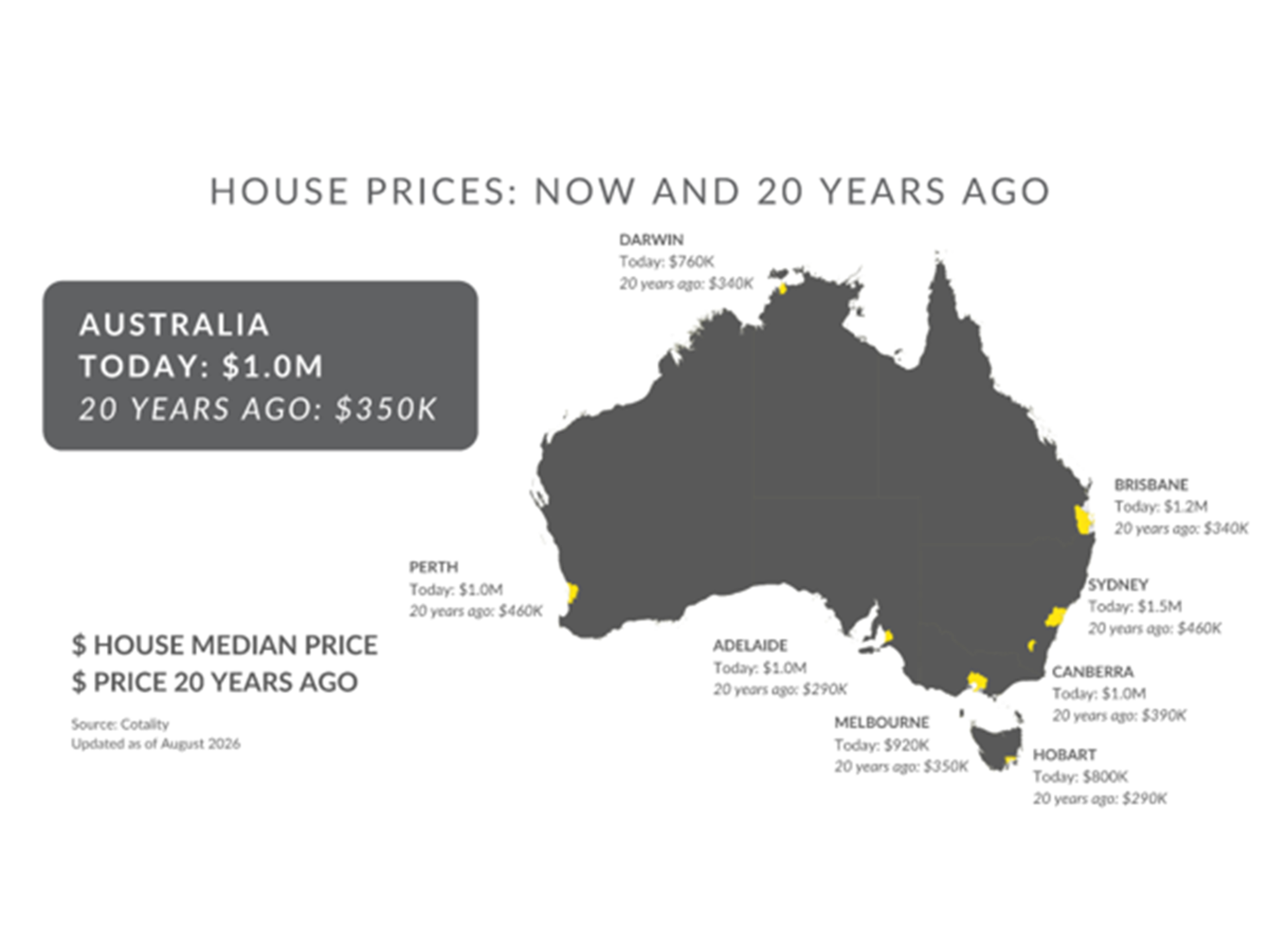
The current market is another example of the housing cycle at work. Higher interest rates and softer buyer demand are putting pressure on prices in some areas, while other markets are proving more resilient. These conditions are important, but they also sit within a much longer period of significant capital growth.
Housing markets will continue to move through different phases. Interest rates change, credit conditions tighten and loosen, buyer confidence shifts and policy settings change. There will always be periods when conditions are stronger, and others when they are more subdued.
For long-term homeowners, the latest movement in prices needs to be kept in perspective. Short-term changes matter, but they are only one part of the broader story. After years of accumulated capital growth, waiting for perfect market conditions can matter far less than it first appears.

Nerida Conisbee, Chief Economist
Nerida is Ray White’s Chief Economist and one of Australia’s leading property experts. In her role as Chief Economist, Nerida provides objective, robust and quality analysis of the property market and economy in Australia and globally. She represents Ray White to inform and influence key stakeholder groups across the residential and commercial sectors, in addition to advising major Australian government bodies. Nerida works closely with industry partners to provide strategic vision and policy recommendations for the future of property in Australia.